Monday, December 6, 2010

Wednesday, December 1, 2010
F1n4lly..@ Bl0g P05t
Ok here are some updates
I have added a c0up13 n3w cu835 t0 my c0113ct10n
Has dramatic music...Rubik's Cubes are h4rd f0r d4 0rd1n4ry
1 minute ago I got a 29.99 solve which is a little above average, but is sub 30
And...................................................
Someone timed me.
Plus I'm getting a Gigaminx. Yaaaaaaaaaaaaaaaaay!
Sunday, September 19, 2010
Cincinnati World Piano Competition
This happened in July 2010 and found this off a website
The Cincinnati-based World Piano Competition announced the winners for its Young Artist Division in an awards ceremony held July 1 at the Aronoff Center. Out of 48 students, ages 5 to 17, who competed, it appears that every youngster in each of 12 categories took home a prize, ranging from $25 to $100.
Here are some highlights:
Sunny Huang, 15, of Novi, Michigan, a student of Faye Mao, won the grand prize of $1,500 in the solo divison, levels 9-12.
Yehan Chen, 16, of Plainfield, Ind., a student of Karen Taylor, won the grand prize of $1,500 for the concerto division, levels 9-12, and a recommended performance with members of the World Symphony Orchestra (to be led by the CSO’s Ken Lam).
Other grand prizes went to ME!!!!!!, student of Nina Polonsky ($500), and co-winners David Du and Suvir Mirchandani, who each won $250.
School
Yes, school started 5 weeks ago. That is why I haven't been posting much, but my weekends are also busy.
Tuesday, August 17, 2010
Wednesday, August 11, 2010
Monday, August 9, 2010
Pillowed Mastermorphix
I got the Mastermorphinx today in the mail at around 4 PM and I scrambled it and I could not finish it, but by watching leopulga's how to solve vid, I finished it. Here's a link to his video:http://www.youtube.com/watch?v=pAw__o20nGQ, http://www.youtube.com/watch?v=MSYqIdLOhwk&feature=related, http://www.youtube.com/watch?v=WQjZGep5gMw&feature=related, http://www.youtube.com/watch?v=1ryM5axl798&feature=related
Sunday, August 1, 2010
Another Update
The ShengEn Type F II is here! Yaaaaaay! I can sometimes get sub-30 on this beast! Once i even got a 19 second solve on this (it was lucky)! So later, I'll be posting a video showing an average solve on my Type F II.
Also, on eBay, I bid on a Pillowed Mastermorphix and I won it for a little over 2 bucks. It is on its way.
Also, on eBay, I bid on a Pillowed Mastermorphix and I won it for a little over 2 bucks. It is on its way.
Saturday, July 24, 2010
Sunday, July 18, 2010
Saturday, July 3, 2010
Thursday, June 24, 2010
Saturday, June 12, 2010
How to Solve a 1x2x2
The 1x2x2 is a very, very, very, very, very, very, very, very, very, very,
very, very, very, very, very, very, very, very, very, very, very, very, very,
very, very, very, very, very, very, very, very, very, very, very, very, very,
very, very, very, very, very, very, very, very, very, very, very, very, very,
very, very, very, very, very, very, very, very, very, very, very, very, very,
very, very, very, very, very, very, very, very, very, very, very, very, very,
very, very, very, very, very, very, very, very, very, very, very, very, very,
very, very, very, very, very, very, very, very, very, very, very, very, very,
very, very, very, very, very, very, very, very, very, very, very, very, very,
very, very, very, very, very, very, very, very, very, very, very, very, very,
very, very, very, very, very, very, very, very, very, very, very, very, very,
very, very, very, very, very, very, very, very, very, very, very, very, very,
very, very, very, very, very, very, very, very, very, very, very, very, very,
very, very, very, very, very, very, very, very, very, very, very, very, very,
very, very, very, very, very, very, very, very, very, very, very, very, very,
very, very, very, very, very, very, very, very, very, very, very, very, very,
very, very, very, very, very, very, very, very, very, very, very, very, very,
very, very, very, very, very, very, very, very, very, very, very, very easy puzzle. It is not mass produced as of June 12, 2010. There are only 6 combinations to it. Try figuring it out by yourself logically before you look at how you solve a 1x2x2, but if you are just way too lazy, then look.
To solve the 1x2x2, I will be using the usual speedcubing notation:
R=Turn the right layer 180 degrees
U=Turn the top layer 180 degrees
No D, L, F or B is used.
To solve the 1x2x2, do R U until the cube is solved. Note that the cube may be solved while in the middle of the R U algorithm.
very, very, very, very, very, very, very, very, very, very, very, very, very,
very, very, very, very, very, very, very, very, very, very, very, very, very,
very, very, very, very, very, very, very, very, very, very, very, very, very,
very, very, very, very, very, very, very, very, very, very, very, very, very,
very, very, very, very, very, very, very, very, very, very, very, very, very,
very, very, very, very, very, very, very, very, very, very, very, very, very,
very, very, very, very, very, very, very, very, very, very, very, very, very,
very, very, very, very, very, very, very, very, very, very, very, very, very,
very, very, very, very, very, very, very, very, very, very, very, very, very,
very, very, very, very, very, very, very, very, very, very, very, very, very,
very, very, very, very, very, very, very, very, very, very, very, very, very,
very, very, very, very, very, very, very, very, very, very, very, very, very,
very, very, very, very, very, very, very, very, very, very, very, very, very,
very, very, very, very, very, very, very, very, very, very, very, very, very,
very, very, very, very, very, very, very, very, very, very, very, very, very,
very, very, very, very, very, very, very, very, very, very, very, very, very,
very, very, very, very, very, very, very, very, very, very, very, very easy puzzle. It is not mass produced as of June 12, 2010. There are only 6 combinations to it. Try figuring it out by yourself logically before you look at how you solve a 1x2x2, but if you are just way too lazy, then look.
To solve the 1x2x2, I will be using the usual speedcubing notation:
R=Turn the right layer 180 degrees
U=Turn the top layer 180 degrees
No D, L, F or B is used.
To solve the 1x2x2, do R U until the cube is solved. Note that the cube may be solved while in the middle of the R U algorithm.
Sunday, June 6, 2010
How to Solve a 1x4x4
The 1x4x4 is a puzzle that has not been invented or mass-produced yet as of June 6, 2010. kcwong707 on eBay sells them, but they are not fully functional. If you would like to buy one, click here. If eBay says the listing has ended, search something like "1x4x4 rubik" in the search bar. Anyways, let's get to solving it.
The algorithm notation is just like the one I use for speedcubing:
U=Turn the top layer 180 degrees
D=Turn the bottom layer 180 degrees
R=Turn the right layer 180 degrees
L=Turn the left layer 180 degrees
Also these notations that you may not know are:
u=Turn both top and middle-top layers 180 degrees
d=Turn both bottom and middle-bottom layers 180 degrees
r=Turn both right and middle-right layers 180 degrees
l=Turn both left and middle-left layers 180 degrees
2U=Turn only middle-right layer 180 degrees
2D=Turn only middle-bottom layer 180 degrees
2R=Turn only middle-right layer 180 degrees
2L=Turn only middle-left layer 180 degrees
z'=Flip whole cube over like this (I used 3x3x3 instead of 1x4x4 to show the alg)-->click here
When performing algorithms, always twist with the 4x4 square facing you.
The first step is solving the outer band. Like the 1x3x3, just position, if needed, let's just say, the blue and green. Solve it by twisting the layer to finish the blue and green side. This only takes few moves to finish and position the side. Last, finish the remaining 2 sides. If you need help, please comment. If the checkerboard case I told you in the 1x3x3 article persists, don't do anything. Also, these are what the checkerboard cases look like. There are 2 cases.


The next step is to solve the centers. You need to learn 2 algorithms.

1. 2L 2R 2U 2L 2R 2U

2. 2R U 2R U 2R
Then, solve the edges. There are 5 cases for this.

1. u r U 2R U r u

2. 2L 2R U 2L 2R U

3. R U R U R U
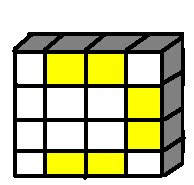
4.2L 2R U 2L 2R U z' u r U R U r u

5. 2L 2R U 2L 2R U z' 2L 2R U 2L 2R U
Last but not least, if you have the checkerboard case on the outer band, here are the algs for the checkerboards.
1. 2L R 2U D 2L R
2. U R D U R D
The algorithm notation is just like the one I use for speedcubing:
U=Turn the top layer 180 degrees
D=Turn the bottom layer 180 degrees
R=Turn the right layer 180 degrees
L=Turn the left layer 180 degrees
Also these notations that you may not know are:
u=Turn both top and middle-top layers 180 degrees
d=Turn both bottom and middle-bottom layers 180 degrees
r=Turn both right and middle-right layers 180 degrees
l=Turn both left and middle-left layers 180 degrees
2U=Turn only middle-right layer 180 degrees
2D=Turn only middle-bottom layer 180 degrees
2R=Turn only middle-right layer 180 degrees
2L=Turn only middle-left layer 180 degrees
z'=Flip whole cube over like this (I used 3x3x3 instead of 1x4x4 to show the alg)-->click here
When performing algorithms, always twist with the 4x4 square facing you.
The first step is solving the outer band. Like the 1x3x3, just position, if needed, let's just say, the blue and green. Solve it by twisting the layer to finish the blue and green side. This only takes few moves to finish and position the side. Last, finish the remaining 2 sides. If you need help, please comment. If the checkerboard case I told you in the 1x3x3 article persists, don't do anything. Also, these are what the checkerboard cases look like. There are 2 cases.


The next step is to solve the centers. You need to learn 2 algorithms.

1. 2L 2R 2U 2L 2R 2U

2. 2R U 2R U 2R
Then, solve the edges. There are 5 cases for this.

1. u r U 2R U r u

2. 2L 2R U 2L 2R U

3. R U R U R U
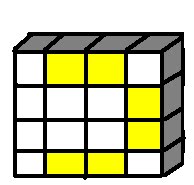
4.2L 2R U 2L 2R U z' u r U R U r u

5. 2L 2R U 2L 2R U z' 2L 2R U 2L 2R U
Last but not least, if you have the checkerboard case on the outer band, here are the algs for the checkerboards.
1. 2L R 2U D 2L R
2. U R D U R D
Saturday, June 5, 2010
Monday, May 31, 2010
Sunday, May 30, 2010
Sunday, May 23, 2010
How to Solve a Floppy Cube (1x3x3)
This is going to be a tutorial on how to solve a Floppy Cube, also known as a 1x3x3. The Floppy Cube is a very easy puzzle. You may want to tty figuring this out on your own, because of how easy it is. But, if you are too lazy or if you can not figure the Floppy Cube out, then, just follow along with this tutorial.
The algorithm notation is just like the one I use for speedcubing:
U=Turn the top layer 180 degrees
D=Turn the bottom layer 180 degrees
R=Turn the right layer 180 degrees
L=Turn the left layer 180 degrees
M=Turn the vertical middle layer 180 degrees
E=Turn the horizontal middle layer 180 degrees
While performing an algorithm, make sure that the 3x3 square is facing towards you.
To solve the Floppy Cube, you must solve the gray, black, green and blue sides first. This is called the Outer Band. It is usually pretty easy to complete, so only 1 algorithm will be provided. Just position, if needed, let's just say, the blue and green. Solve it by twisting the layer to finish the blue and green side. This only takes one to two moves to finish and position the side. Last, finish the remaining 2 sides.
You may get one case on the outer band called the checkerboard. It looks like the floppy cube below.
 If you get this, don't do anything. Advance to the next step. Obviously, if the outer band is solved, advance, too.
This step requires you to learn 3 algorithms. They are all pretty easy.
 1. M U M U
 2. R U R U R U
 3. M U M U E R E R
At last, if you had that checkerboard case on the outer band, do
U R D U R D
Congratulations! You have solved your Floppy Cube.
The algorithm notation is just like the one I use for speedcubing:
U=Turn the top layer 180 degrees
D=Turn the bottom layer 180 degrees
R=Turn the right layer 180 degrees
L=Turn the left layer 180 degrees
M=Turn the vertical middle layer 180 degrees
E=Turn the horizontal middle layer 180 degrees
While performing an algorithm, make sure that the 3x3 square is facing towards you.
To solve the Floppy Cube, you must solve the gray, black, green and blue sides first. This is called the Outer Band. It is usually pretty easy to complete, so only 1 algorithm will be provided. Just position, if needed, let's just say, the blue and green. Solve it by twisting the layer to finish the blue and green side. This only takes one to two moves to finish and position the side. Last, finish the remaining 2 sides.
You may get one case on the outer band called the checkerboard. It looks like the floppy cube below.

This step requires you to learn 3 algorithms. They are all pretty easy.


At last, if you had that checkerboard case on the outer band, do
U R D U R D
Congratulations! You have solved your Floppy Cube.
Subscribe to:
Posts (Atom)